
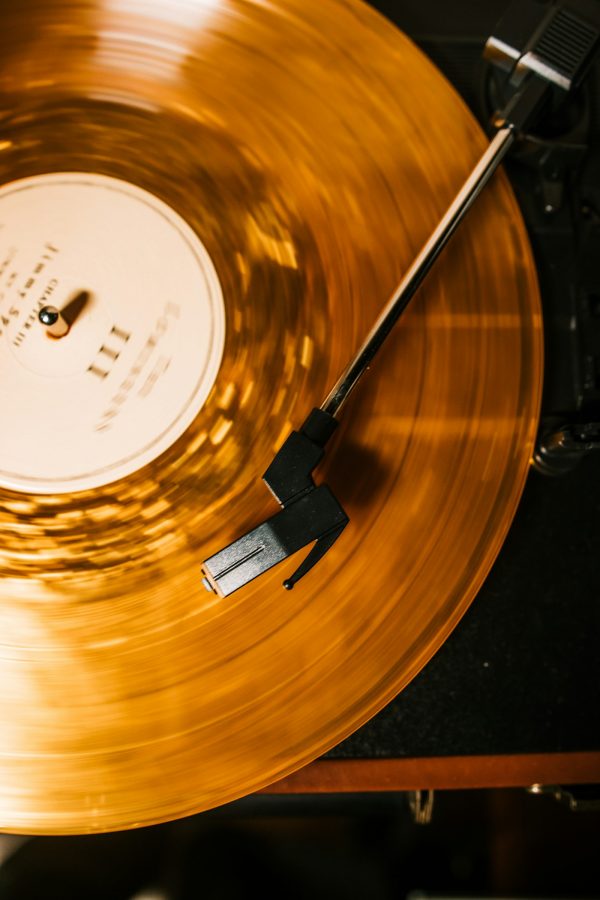
The 1970s were the most creatively turbulent decade in the history of Hindi film music. The old guard — Shankar-Jaikishan, Madan Mohan, Roshan — were either fading or gone. New voices were arriving, absorbing everything from qawwali to funk, from Carnatic classical to European orchestral pop, and recombining it in ways that had no precedent. These five records document that decade’s finest hours.
1. Amar Prem — R.D. Burman (1972)
Pancham’s masterpiece, and the record that announced how far Bollywood could travel from its classical foundations while remaining entirely itself. “Chingari Koi Bhadke” is harmonically ambiguous in ways that Western pop of the same period was not even attempting. The original HMV pressing captures the orchestral depth that streaming simply cannot reproduce.
2. Parichay — R.D. Burman (1972)
Where Amar Prem is melancholy, Parichay is anarchic. “Musafir Hoon Yaaron” became so embedded in the culture that it now feels prehistoric — but hearing it on vinyl, at volume, is a reminder that it was once a genuinely strange and radical piece of music. The rhythm section alone justifies the price of admission.
3. Koshish — Madan Mohan (1972)
A film about deaf-mute protagonists, scored by the composer most obsessed with the human voice. The apparent paradox produced Madan Mohan’s most purely orchestral work, a record that proves you can communicate everything with strings and woodwind that a lyric might have stated in words. Deeply underrated outside of serious collector circles.
4. Namak Haram — R.D. Burman (1973)
“Diye Jalte Hain” is the most perfectly produced Kishore Kumar recording of the decade. The original pressing shows dynamic range that justifies every rupee of a proper turntable setup. This is also the record that introduced a generation of listeners to Burman’s use of silence — the rests between phrases that feel as musical as the notes themselves.
5. Mili — S.D. Burman (1975)
The elder Burman’s final completed score, and one of the most emotionally concentrated records in the canon. The interaction between Lata Mangeshkar and the chamber orchestra on “Badi Sooni Sooni Hai” is, in this writer’s view, the finest three minutes in the history of Hindi film music. Seek an original pressing. Do not accept a reissue.
All five records are available in original pressings if you know where to look. The search is part of the pleasure.
